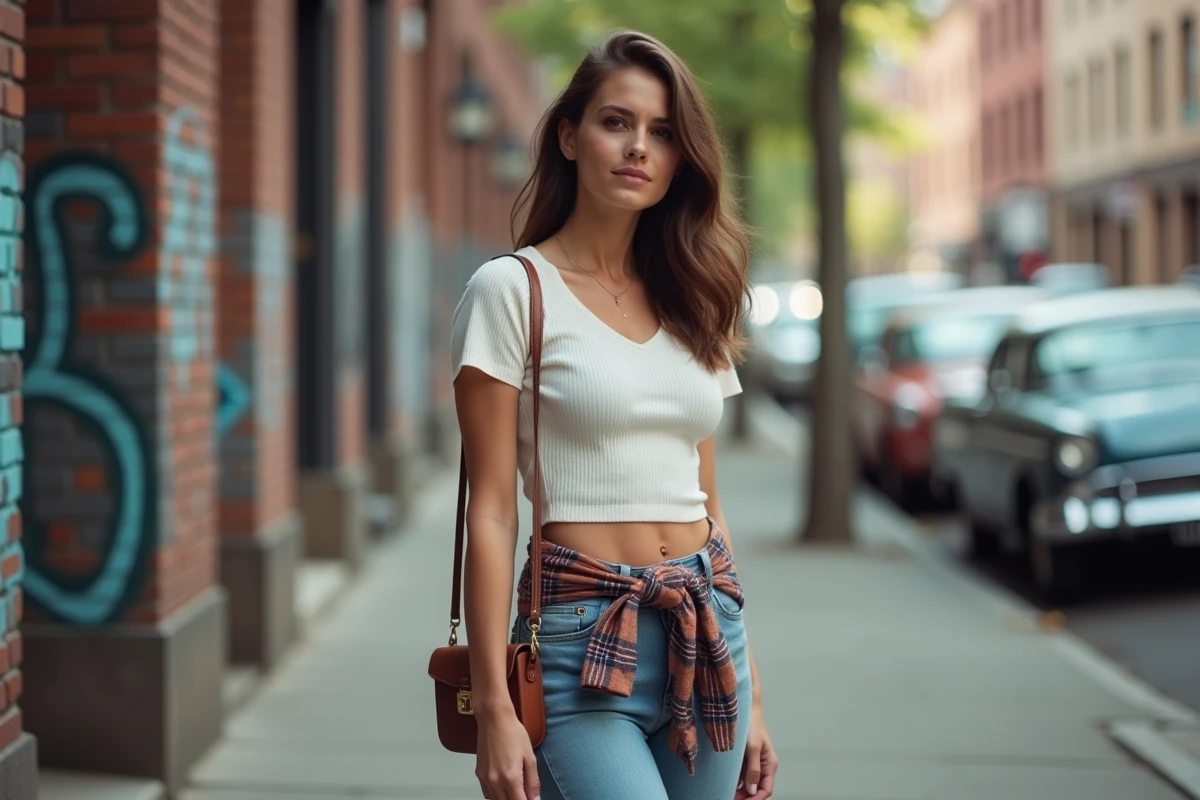
The year 1995 holds a unique place in clothing history. Sandwiched between the declining grunge and the rise of minimalism, the fashion of 1995 produced silhouettes that resurface with striking regularity on today’s runways. Baggy jeans, bandana prints, chunky jewelry: these pieces are not returning out of nostalgia, but because luxury houses and celebrities are reintroducing them into the circuit with contemporary interpretations.
Bandana Print 1995: From Streetwear to Luxury Runway in 2026
Among the patterns that defined the mid-90s wardrobe, the bandana print is the one whose return is most documented. In 1995, it circulated mainly in streetwear and R&B culture, tied around the wrist, worn as a scarf, or integrated into oversized shirts. The stylized paisley pattern on a colorful background functioned as a marker of belonging, far from luxury circuits.
What changes in 2026 is the medium. The bandana print appears on flowing dresses, tailored pants, and even loafers, in luxurious materials that have nothing to do with the original cotton scarf. This migration of the pattern to sophisticated cuts transforms a popular dress code into a runway piece, without completely erasing its streetwear lineage.
For those looking to understand how these codes were formed, the fashion trends of 1995 on Aleph Zarro allow a return to the original silhouettes and measure the gap with current reinterpretations.
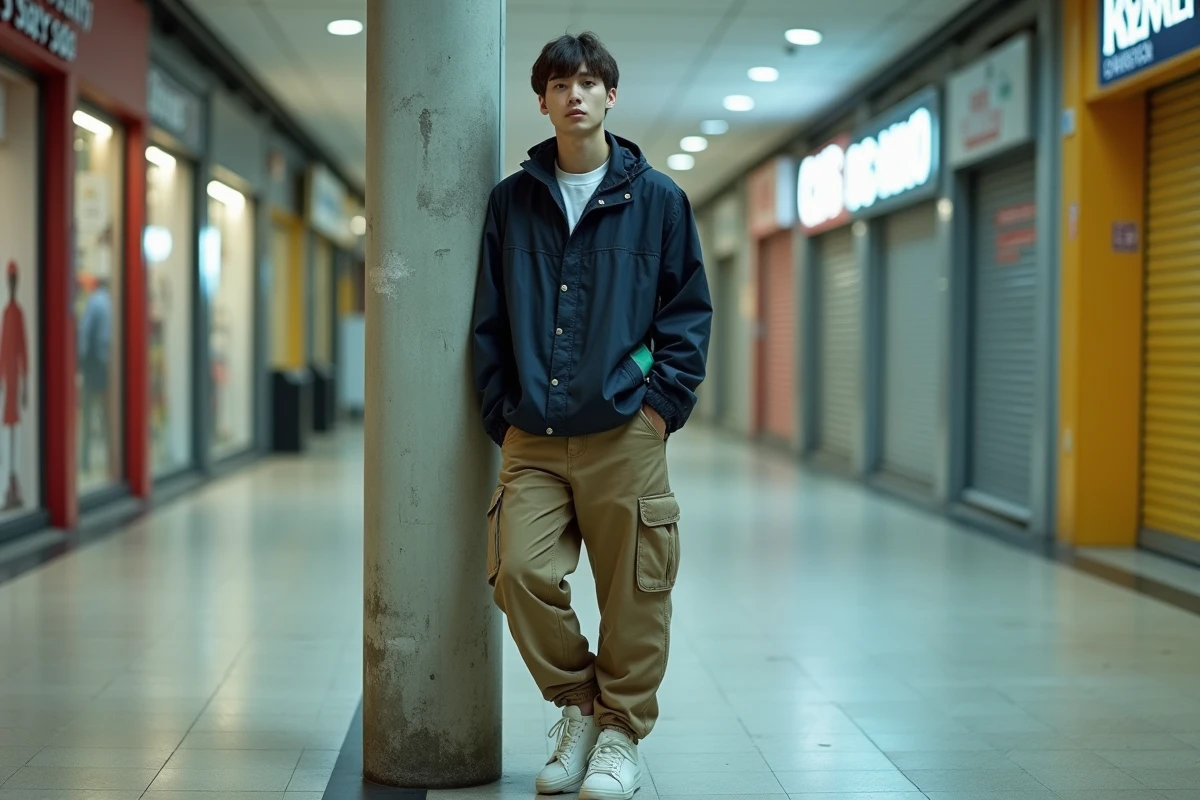
Versace Archive Dresses 1995: When Celebrities Revive a Specific Piece
The return of 1995 fashion is not limited to diffuse trends. It also involves the literal reappearance of archive pieces on contemporary celebrities. The most notable case concerns a mini-sequin dress by Versace from the autumn-winter 1995-1996 collection, worn at the time by Kate Moss.
Dua Lipa wore this same dress at a bachelorette party, generating significant media coverage in 2026. The event goes beyond mere celebrity gossip. It shows that certain pieces from 1995 possess enough stylistic weight to function three decades later without alteration.
This phenomenon raises a question about the value of fashion archives. When a runway dress spans thirty years and produces the same visual effect, the notion of cyclical trends reaches its limits: it is no longer a return, but a continuity.
Chunky Jewelry and the Anti-Quiet Luxury Trend in 1995 and Today
Articles discussing 90s style mostly focus on jeans, crop tops, or oversized leather jackets. Jewelry remains a little-covered angle, even though it was a structuring element of the 1995 look.
The mid-90s favored bold accessories:
- Thick chokers, often in black velvet or metal, worn snugly around the neck, defining the silhouette as much as a garment
- Wide hoops, in gold or silver, associated with both R&B and minimalist evening looks
- Stacked cuffs and bracelets, which added volume to the wrists on otherwise simple outfits
In 2026, these jewelry codes return under the label anti-quiet luxury. This trend opposes the discreet minimalism that dominated previous seasons. The chunky jewelry inspired by 1995 reappears on runways, with bold proportions and refined finishes.
The link between the two eras is direct. The jewelry volumes of 1995 anticipated the current rejection of discretion, at a time when visible luxury had not yet been theorized as a trend in its own right.
Baggy Jeans and Oversized T-Shirts: The Wardrobe Foundation of 1995
Jeans remain the most associated piece with 1995 fashion, but not just any jeans. The dominant cut of the time oscillated between boyfriend and wide leg, worn at a mid to high waist, often faded. The Levi’s 501, already old, was experiencing one of its strongest phases of popularity, worn by women with rolled hems and flat sneakers.
The oversized t-shirt completed this foundation. Solid, band logo printed, or branded with the sportswear labels of the time, it was worn tucked into the jeans or hanging over the hips. This duo of baggy jeans and loose t-shirt formed the default look of 1995, one that could be found both on the streets and in television series.
Sweatshirts and Evening Dresses: The Two Extremes of Women’s Wardrobe
The hoodie or crewneck sweatshirt held an increasingly prominent place in the women’s wardrobe of 1995, worn with jeans or a short skirt. Sportswear brands surfed on the blurring between casual wear and going-out looks.
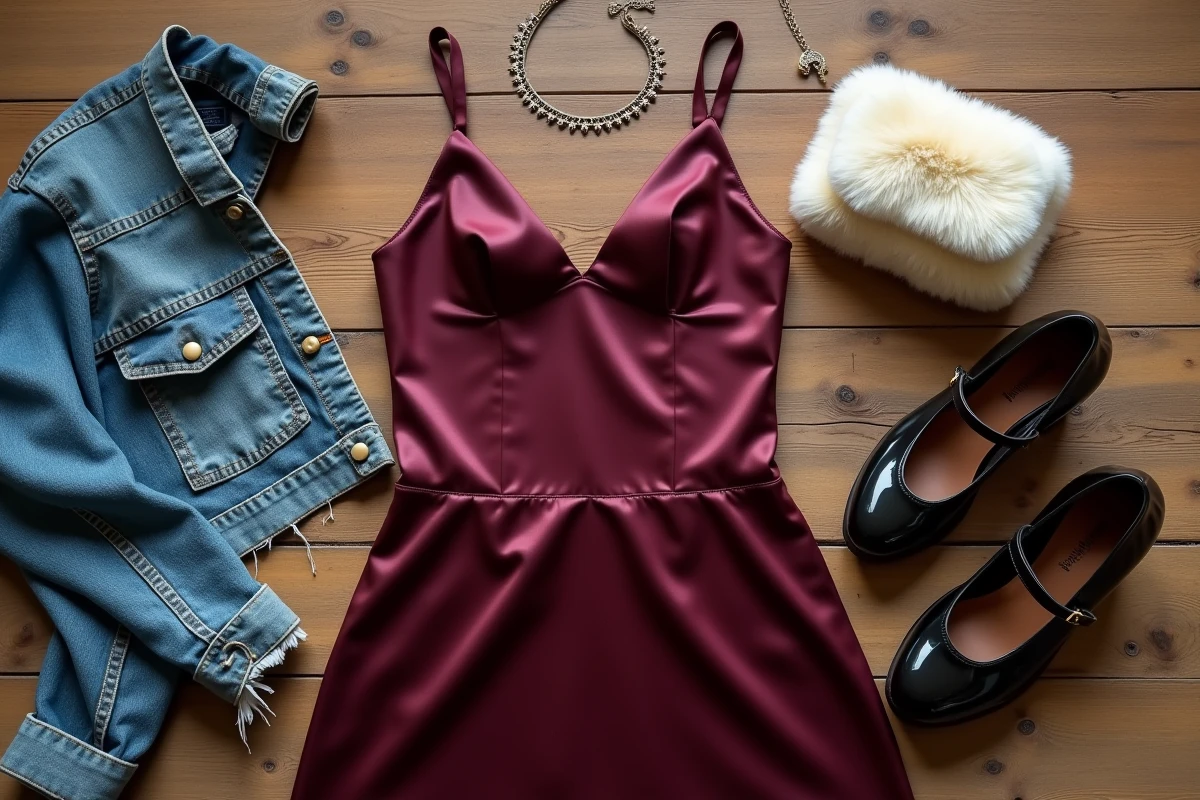
On the opposite end, the evening dress of 1995 remained very structured. Body-hugging cuts, shiny materials, varying lengths from mini to long. The gap between everyday casual and evening glamour was much more pronounced than today, where style tends to blur these boundaries.
The fashion of 1995 was not a homogeneous block. It juxtaposed contradictory influences (ending grunge, emerging minimalism, R&B, sportswear) without attempting to reconcile these currents. Perhaps this explains why its pieces return in a fragmented way: each current of 1995 fuels a different revival, from luxury bandanas to Versace archives, without a single style imposing itself.