
When you push the door of an audiology center for the first time, you often discover that the choice of the brand weighs as much as the choice of the device. Audika and Amplifon dominate the French hearing aid market, but their operating models differ on a structural point that few patients identify before the trial. Understanding this difference allows you to direct your search towards the network that truly corresponds to your hearing loss and expectations.
Hearing Aid Catalog: Vertical Integration vs. Multi-Brand Offering
This is the first criterion to check even before making an appointment. Audika belongs to the Danish group Demant, which also manufactures Oticon, Bernafon, and Philips Hearing devices. In practice, the catalog offered at Audika centers is predominantly oriented towards these brands from the same group.
Amplifon operates differently. The Italian group, listed on the stock exchange, is not tied to any single manufacturer. This capital independence allows it to reference several competing brands in its centers, although the selection varies from country to country.
The direct consequence for the patient: at Audika, you benefit from specialized expertise on the Demant ranges (the audioprosthetists know these products inside out), but the choice remains within a defined perimeter. At Amplifon, you have access to a broader range, which can facilitate the comparison of technologies. A comparison between Audika and Amplifon shows that this distinction directly influences the type of device you end up wearing daily.

Amplifon Specialized Networks: Tinnitus, Children, and Hearing Implants
An aspect often absent from discussions at the center concerns specific care. Amplifon has structured dedicated networks in France for specific issues:
- Tinnitus Network: over 200 centers equipped to support patients suffering from persistent ringing or buzzing, with adapted protocols.
- Children’s Network: over 50 centers trained in pediatric hearing, from infants to adolescents, with audioprosthetists specialized in fitting the youngest.
- Implant Network: over 200 professionals trained in post-cochlear implant follow-up, a skill that requires distinct expertise from standard fitting.
Audika does not communicate about specialized networks comparable to this scale. For an adult with standard hearing loss, the difference is not felt. However, for a parent seeking pediatric fitting or a person suffering from severe tinnitus, the specialization of the center weighs more than the brand of the device.
Audika Ranges and Price Levels: What Class 1 Changes Concretely
Audika structures its offer around four main ranges: Blink (integrating artificial intelligence and motion sensors), Blink Mini (almost invisible in-ear), Extra (enhanced autonomy), and the 100% Health range, which corresponds to class 1 devices fully reimbursed by Social Security and mutual insurance.
Each range is available in three technological levels, creating a wide but sometimes confusing array during appointments. The audioprosthetist guides the choice based on the degree of loss, lifestyle, and budget.
The Question of 100% Health at Both Brands
Both networks offer class 1 devices with zero out-of-pocket costs. On paper, the system is identical. In practice, class 1 models differ from one brand to another, as each references its own brands. Basic functionalities (amplification, noise reduction) remain comparable, but wearing comfort, weight, and Bluetooth connectivity vary depending on the chosen manufacturer.
For class 2 devices (with out-of-pocket costs), the price difference between Audika and Amplifon mainly depends on the chosen model and technological level. Feedback on this point varies: some patients report similar prices, while others note significant differences based on ongoing promotions.
Audioprosthetist Follow-Up and In-Center Trial: The Details That Matter Daily
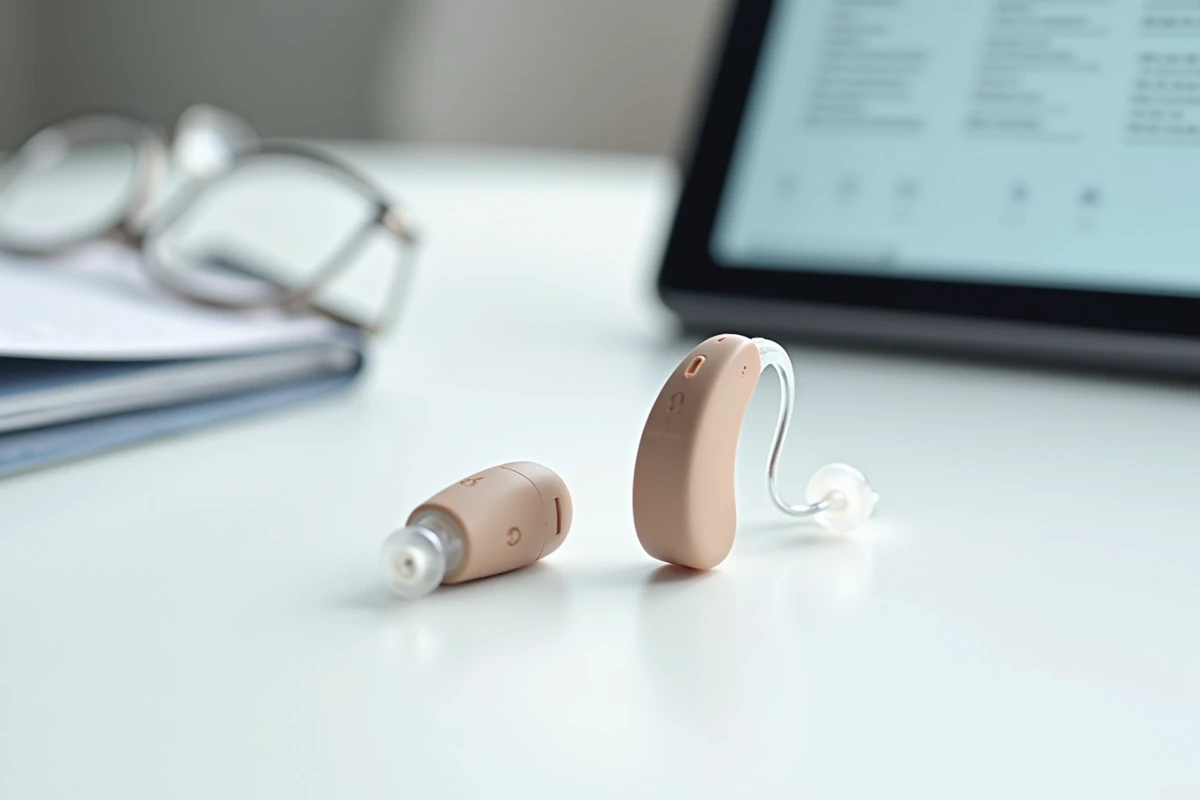
Hearing fitting is not just about the purchase. Post-fitting follow-up, successive adjustments, and the center’s responsiveness in case of a malfunction constitute the essence of the long-term experience.
Audika highlights a 30-day trial and a network of over 600 centers in France. The density of the territorial network facilitates adjustment appointments, especially in rural areas. The fact that audioprosthetists work almost exclusively with Demant brands gives them in-depth technical mastery of these devices.
Amplifon claims around 700 centers, with a slightly denser network. The advantage of a multi-brand catalog is also reflected in follow-up: if a model does not suit, the audioprosthetist can offer a device from a different manufacturer without changing brands. At Audika, the change remains within the Demant family.
Bluetooth Connectivity and Smartphone Compatibility
The recent ranges from both brands offer Bluetooth connectivity with smartphones. Audika announces compatibility with iPhone and Android on its Blink ranges. At Amplifon, compatibility depends on the chosen device brand, which broadens or restricts options based on the selected model.
For Samsung phone users, compatibility guides exist to facilitate pairing with hearing aids, regardless of the chosen network.
The choice between Audika and Amplifon is less about the displayed price than about the catalog logic. You choose Audika for the expertise concentrated on Demant brands, you choose Amplifon for the diversity of manufacturers and specialized networks. The most reliable approach is to test both during appointments, asking each audioprosthetist which specific models they can offer for your type of hearing loss.