
Hair and eye colors vary in fascinating ways, creating unique combinations for each individual. These variations come from genetics, where thousands of genes interact to determine the precise shades. A person may have red hair with green eyes, a rare combination that often attracts attention.
Beyond the scientific aspect, these features also influence social and cultural perception. In some cultures, certain combinations are especially prized or even surrounded by myths and legends. This visual diversity makes every human encounter unique, adding a touch of mystery to individual beauty.
The scientific basis of hair and eye color
Hair and eye colors are determined by a complexity of genetic factors. The main contributors to this diversity are the natural pigments: melanin, eumelanin, and pheomelanin. The proportion of these pigments directly influences the color of hair and eyes.
- High concentrations of eumelanin produce black or brown hair.
- Pheomelanin, present in larger quantities, gives red hair.
- The combination of these two types of melanin can also create blonde hair.
The colors of the eyes are also influenced by melanin. Little melanin results in blue eyes, a moderate amount produces green eyes, and a higher concentration creates brown eyes. The fascinating combination of red hair and green eyes, for example, is one of the rarest, making the rare redhead with green eyes a true genetic singularity.
The skin tone and undertone also play a fundamental role in overall visual appearance. These elements are determined by the same natural pigments responsible for hair and eye colors, creating either harmony or striking contrast depending on the individuals.
The interactions between these various genetic factors produce a rich palette of combinations. Understanding these mechanisms allows for a greater appreciation of the diversity and unique beauty of each person.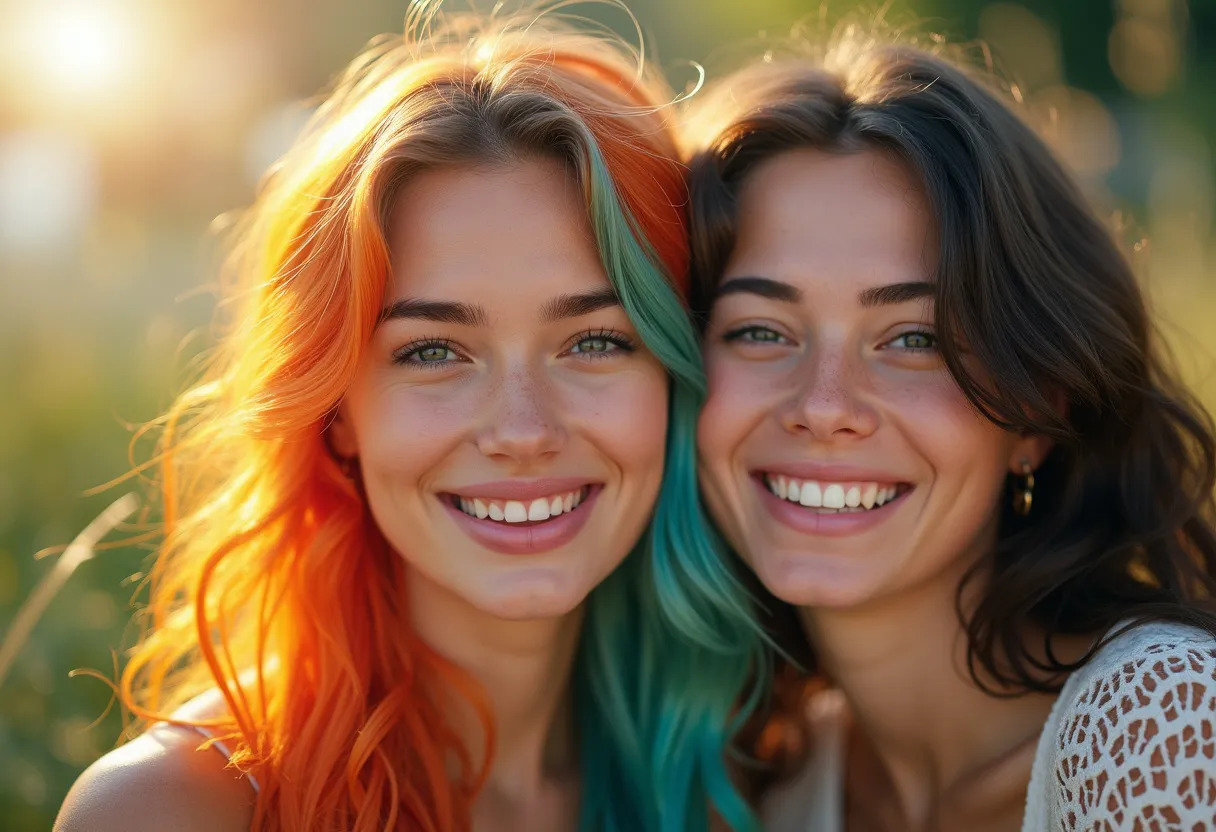
How color combinations influence our perception
Clothing colorimetry is based on theories established by experts such as Carole Jackson and Johannes Itten. The four seasons theory, developed by Jackson, groups individuals into four categories based on the temperature, value, and purity of colors. This theory is inspired by Itten’s color wheel, which organizes colors based on their visual and emotional relationships.
- The spring woman is characterized by warm and light colors.
- The summer woman favors cool and soft shades.
- The autumn woman is distinguished by warm and deep tones.
- The winter woman adopts cool and intense hues.
To go further, the 12 seasons theory refines these categories by taking into account subtle variations, allowing for greater personalization. The draping method, for example, uses fabrics of different colors to observe how each shade reacts with a person’s skin tone and hair. This technique helps determine the ideal colors to enhance natural beauty.
The perception of color combinations can also be influenced by cultural and psychological factors. Colors convey specific emotions and messages. For instance, red hair associated with green eyes may be perceived as exotic and mysterious, while blonde hair paired with blue eyes often evokes innocence and purity.
These color combinations are not limited to personal aesthetics. They have repercussions in the fields of fashion, design, and even marketing. Consider the visual impact of advertisements and logos, often designed to catch the eye and elicit an immediate emotional response.